
Watch all our floor cleaning videos here.
Your sofa is the central hub of your living space—the spot for movie nights, afternoon naps, and daily relaxation. Naturally, it also takes the brunt of everyday spills, pet dander, skin oils, and dust. If your couch is starting to look a little dingy or smells less than fresh, you might be tempted to grab whatever household cleaner is sitting under your sink.
Before you start spraying, hold that thought! Upholstery fabrics are delicate, and using the wrong products or techniques can lock in stains, strip fabric color, or ruin delicate fibers forever. Here is how you can safely refresh your sofa at home using professional-approved methods.
Step 1: The Golden Rule — Start Gentle with Microfiber
When treating light surface soil or spot-refreshing a section of your couch, less is always more. Start with a simple, clean microfiber rag dampened only with plain water.
Wring out the cloth so it is damp to the touch—never dripping wet—and gently scrub or dab the affected area in light, circular motions. Microfiber is engineered to grab fine dust and surface oils without requiring harsh chemicals or abrasive force.
Pro Tip: Never soak upholstered furniture with water. Excess moisture can seep into the cushion padding underneath, creating a breeding ground for mildew, foul odors, and water-ring stains as it dries.
Step 2: Choose Upholstery-Safe Cleaning Products ONLY
If plain water isn’t cutting through a spot, resist the urge to grab harsh dish soaps, laundry detergents, or harsh viral cleaning hacks like vinegar. These products leave behind heavy chemical residues that act like dirt magnets once dry, causing your couch to get dirty twice as fast.
If you must use a cleaner, ensure it is specifically labeled as upholstery-safe. Always check your couch’s manufacturer tag for its cleaning code before applying anything:
-
W: Water-based cleaners are safe to use.
-
S: Solvent-based cleaners only (water will stain or damage the fabric).
-
S/W: Safe for water-based or solvent-based cleaners.
-
X: Vacuum or professional cleaning only—no water or solvents!
Always test any upholstery cleaner on an inconspicuous spot (like the back or bottom edge of a cushion) first to check for color bleeding or texture changes.
Step 3: Allow Proper Air Drying
After dabbing or gently cleaning a spot, use a dry, clean microfiber towel to blot away as much excess moisture as possible. Keep fans running or windows open to encourage fast air drying.
When to Call in the Professionals
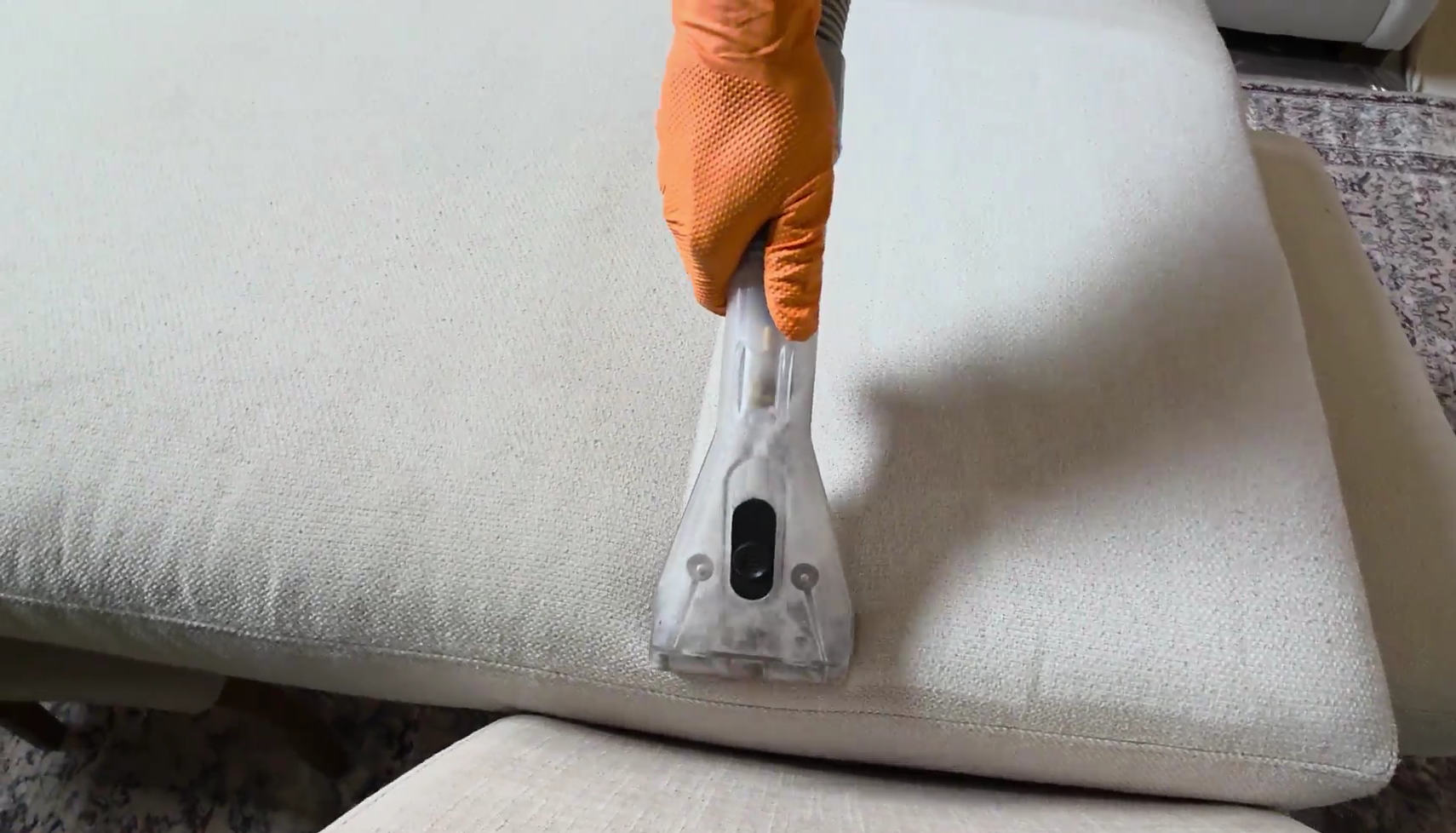
While routine dabbing with damp microfiber handles light maintenance, deep-seated spills, pet accidents, body oils, and overall dinginess require specialized low-moisture steam extraction.
At EcoClean, we use pH-balanced, fabric-safe agitation and high-heat extraction systems to lift years of embedded dirt out of upholstery without soaking the delicate cushions underneath.
Is your sofa due for a true reset? Contact the EcoClean team today for a free upholstery cleaning quote!
Frequently Asked Questions (FAQs)
Q: How often should I get my couch professionally cleaned? A: As a general rule, upholstered furniture should be professionally deep cleaned every 12 to 18 months. However, if you have pets, young children, or family members with allergies, scheduling a professional extraction every 6 to 12 months helps keep dust mites, pet dander, and body oils from settling deep into the cushion foam.
Q: Why does my couch smell worse or look streaky after I tried cleaning it myself? A: This usually happens for two reasons: over-wetting and soap residue. Dumping too much water or household cleaner onto fabric forces dirt and moisture down into the cushion core, where it dries slowly and causes lingering mildew odors or water-ring streaks. Additionally, using standard dish soaps or laundry detergent leaves an invisible sticky residue that attracts fresh dirt the second you sit down.
Q: Can professional steam cleaning remove pet odors and urine stains from a sofa? A: Yes! However, standard surface wiping won’t solve the problem because pet accidents soak deep into the cushion padding underneath the fabric. Professional restoration uses targeted enzyme treatments to break down uric acid crystals, combined with powerful high-heat extraction that pulls the liquid completely out of the furniture core rather than masking the scent with perfumes.
Q: How long will it take for my couch to dry after a professional cleaning? A: Because we use specialized low-moisture extraction systems rather than soaking your furniture, most couches and armchairs dry completely within 2 to 6 hours. Keeping ceiling fans running or opening nearby windows helps accelerate drying time even further so you can get back to relaxing on your sofa the same day.

