
Watch all our floor cleaning videos here.
How Do Professional Cleaners Clean Hardwood Floors Safely?
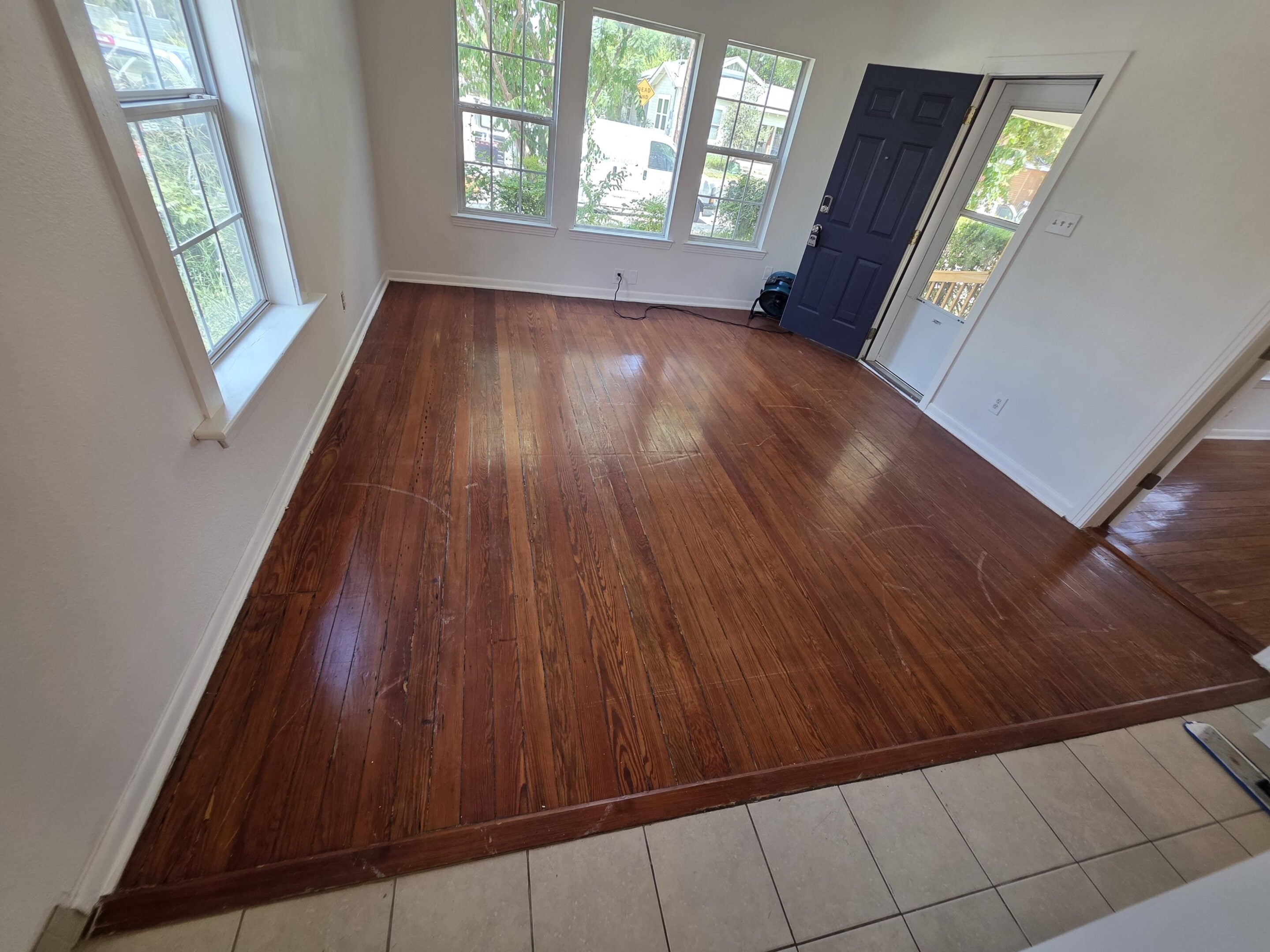
Hardwood flooring is one of the most valuable capital assets in any home or commercial building. It adds warmth, high-end aesthetics, and long-term property value. However, real wood is an organic material that reacts strongly to its environment.
When property managers and homeowners in San Antonio see dirt building up in the wood grain or notice their floors looking dull, the natural impulse is to reach for a mop and a bucket. Unfortunately, treating natural hardwood like durable porcelain tile is a massive mistake that can lead to permanent structural damage.
So, how do professional floor technicians deep clean hardwood floors without risking cupping, warping, or finish breakdown? It comes down to understanding organic material science, managing moisture levels, and using specialized low-moisture extraction machinery.
The Hidden Danger: Water and Hardwood
To understand safe hardwood cleaning methods, you must first understand why DIY approaches fail.
Real wood planks act like sponges. When water penetrates the polyurethane seal or seeps between the plank seams, the underlying wood fibers swell. Over time, excess moisture causes two major structural failures:
-
Cupping: The edges of the wood planks swell and rise higher than the center, creating an uneven, wavy floor profile.
-
Crowning: The center of the plank swells upward, warping the surface.
In addition to water damage, using generic household cleaners, vinegar, or oil soaps leaves behind a tacky chemical residue. This film acts like a magnet for Texas dirt, causing your floors to look dirty again just days after mopping.
The 4-Step Professional Hardwood Safety Protocol
A specialized floor care provider follows a strict, low-moisture protocol designed to remove embedded soil while preserving the integrity of the wood and its clear protective coating.
DIY Cleaning vs. Professional Hardwood Care
| Feature | DIY Mopping / Steam Mops | Professional Hardwood Care |
| Moisture Control | High risk of over-wetting & standing water | Controlled micro-mist with instant vacuum recovery |
| Heat / Steam Safety | Steam forces moisture deep into wood seams | Temperature-controlled, wood-safe chemistry |
| Residue Buildup | High (Sticky film attracts dirt quickly) | Zero residue (pH-neutral, streak-free rinse) |
| Soil Removal | Pushes dirt around surface | Mechanical brush agitation extracts embedded soil |
| Asset Lifespan | Can accelerate warping & finish peeling | Extends polyurethane coat & protects real estate value |
For a complete look at how specialized machinery adapts across different hard surfaces in your building, explore our guide on What Floors Can Professional Cleaners Clean?
Protecting Your San Antonio Hardwood Investment
Your hardwood floors shouldn’t be subjected to harsh household chemicals or high-moisture mop buckets. Preserving their rich beauty requires precision equipment, controlled chemical pH, and a technician who respects the material.
Let Carlos and our expert hard-surface technicians eliminate your floor maintenance anxiety with safe, low-moisture hardwood restoration.
Want to safely restore the beauty of your real wood floors? Book a free estimate or call us directly at (210) 540-2043 to schedule your on-site floor evaluation in San Antonio today!
Frequently Asked Questions (FAQs)
Are steam mops safe for hardwood floors?
No. Steam mops force high-pressure heat and steam deep into the microscopic cracks and seams of your hardwood flooring. This heat can break down the polyurethane finish and cause the underlying wood fibers to warp, swell, and cup over time.
What chemical pH is safest for natural wood?
Professionals always use a pH-neutral (pH 7) cleaning chemistry specifically formulated for wood finishes. Alkaline or acidic cleaners (like vinegar or ammonia) dissolve the clear protective topcoat, leaving the raw wood vulnerable to moisture damage and staining.
How often should commercial or residential hardwood be professionally cleaned?
For active residential homes, a professional deep clean every 6 to 12 months keeps abrasive grit from dulling the protective finish. For commercial properties with high foot traffic, scheduled service every 3 to 6 months protects your capital asset and maintains a flawless shine.

