
Watch all our floor cleaning videos here.
If you own a home in San Antonio, you know that saltillo tile is more than just a flooring choice—it is a cultural staple of South Texas architecture. From the historic homes in Monte Vista to the sprawling estates in the Hill Country, these sun-baked clay tiles provide a rustic, warm aesthetic that is impossible to replicate with modern porcelain.
However, at EcoClean Texas, we’ve seen too many beautiful floors ruined by generic advice found on the internet. National “cleaning” blogs often recommend one-size-fits-all solutions that are actually “death sentences” for Mexican clay. Because our San Antonio climate is unique—with high humidity and plenty of limestone-rich dust—your saltillo tile maintenance requires a specialized approach.
The Problem with “National” Advice
When you search for “how to clean saltillo tile,” you are met with articles from massive home improvement sites that treat saltillo like it’s ceramic. It isn’t. Saltillo is handmade, low-fired clay. It is essentially a sponge. If you treat it like a kitchen backsplash, you will destroy the finish. In this guide, we’re going to debunk the myths and show you exactly how to protect your investment.
🛑 The “Saltillo Killers”: Why Your Current Routine Might Be Ruining Your Floors
1. The Vinegar Myth (The Acid Trap)
The most common mistake we see in San Antonio homes is the use of vinegar and water. Many people believe that because vinegar is “natural,” it’s safe.
The Reality: Vinegar is acetic acid. Saltillo tile relies on a topical sealer for its color and protection. Acidic cleaners eat away at that sealer bit by bit. Once the sealer is gone, the acid begins to “etch” the clay itself. This makes the tile feel rough, look chalky, and—worst of all—makes it incredibly porous. A porous saltillo tile will absorb spills instantly, leading to permanent stains that no amount of mopping can fix.
2. The Steam Mop Warning
Steam mops have become the “trendy” way to clean floors, but they are a disaster for saltillo tile.
The Reality: Steam mops use pressurized heat to blast dirt away. On saltillo, that heat can cause “blushing”—a phenomenon where moisture gets trapped between the clay and the sealer, turning your beautiful orange tiles a milky, cloudy white. Furthermore, the pressure can cause the sealer to flake and peel. Once your sealer is compromised, moisture from our San Antonio humidity can seep into the tile, leading to efflorescence (that white, powdery salt that rises to the surface).
3. The Store-Bought “Wax” Trap
Many homeowners try to restore the shine themselves using “quick-fix” floor waxes found at big-box stores. These products are often acrylic-based and don’t breathe. Over time, they layer up, trap dirt, and turn a nasty yellow-brown color. Removing these DIY waxes is a labor-intensive process that requires professional saltillo tile restoration.
✨ The Pro-Approved Cleaning Method
If you want to keep your modern saltillo or traditional terracotta looking fresh between professional cleanings, follow this strict 3-step routine:
Step 1: Dry Soil Removal (The Most Important Step)
In Texas, we have a lot of abrasive grit. If you mop without removing the dust first, you are essentially rubbing sandpaper across your sealer.
-
Use: A soft-bristle broom or a dry microfiber dust mop.
-
Avoid: Upright vacuums with “beater bars,” which can chip the soft edges of the clay.
Step 2: Neutral pH Cleaning
You need a cleaner that “does no harm.”
-
Use: A specialized neutral floor cleaner diluted specifically according to the label. These cleaners are designed to break down oils and surface dirt without reacting with the sealer.
-
Pro Tip: If you can’t find a neutral stone cleaner, a very small drop of mild dish soap in a large gallon of water is better than vinegar, but a professional-grade solution is always preferred for a streak-free finish.
Step 3: Controlled Mopping
Saltillo tile grout lines are usually much wider than standard tile (often 1/2 inch to 1 inch wide). These grout “valleys” act as gutters for dirty water.
-
Use: A microfiber flat mop. It holds less water than a string mop, preventing the “gutter effect” where dirty water pools in your grout and turns it black.
🛠️ The Power of Restoration: When Cleaning Isn’t Enough
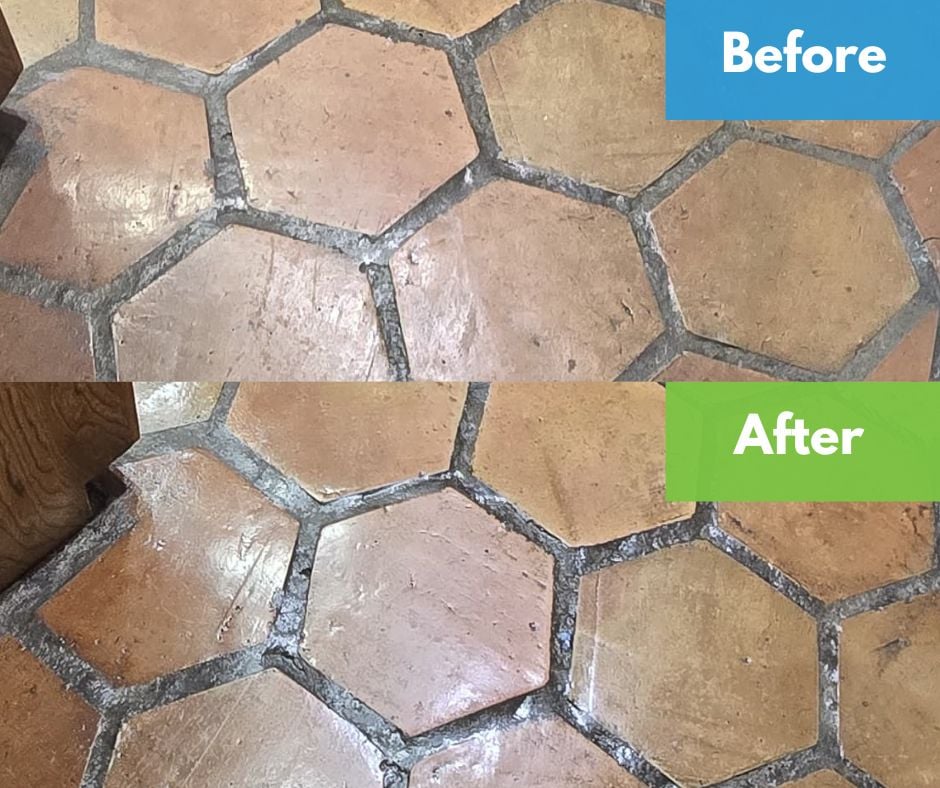
Sometimes, the damage is already done. If your tiles are dark, the grout is black, or the finish is peeling, a mop won’t help. This is where EcoClean Texas comes in.
Our Restoration Process:
-
Professional Stripping: We use specialized, floor-safe strippers to remove years of old, discolored wax and dirt.
-
Deep Extraction: Using our truck-mounted system, we draw out the “deep-seated” dirt that has been living in the pores of the clay for decades.
-
Drying & Assessment: We ensure the tile is completely dry (essential for the San Antonio climate) before moving to the final step.
-
Professional Sealing: We apply a high-solids, breathable sealer. This doesn’t just make the floor look great; it creates a bulletproof barrier against spills, pet accidents, and Texas mud.
🔗 Beyond Saltillo: Total Floor Care
While saltillo is a specialty, it isn’t the only floor we handle. Many San Antonio homes feature a mix of materials. If you have other surfaces, check out our guides for:
🌵 Why San Antonio Trusts EcoClean Texas
We aren’t a national franchise. We are local experts who understand that a home in the 210 area code deals with different challenges than a home in New York. We know the clay, we know the sealers, and we know how to make your floors the centerpiece of your home again.
Stop guessing with your floors. Modern saltillo is an investment that can last 50+ years if handled with care. If your floors have lost their luster, or if you’re worried you’ve used the wrong chemicals, give us a call.
Ready to see the difference?
Don’t settle for dull, dirty floors. Let Carlos and the team at EcoClean Texas restore the “wow factor” to your home.
👉 Book a Free Estimate 📞 Call (210) 361-8127

