
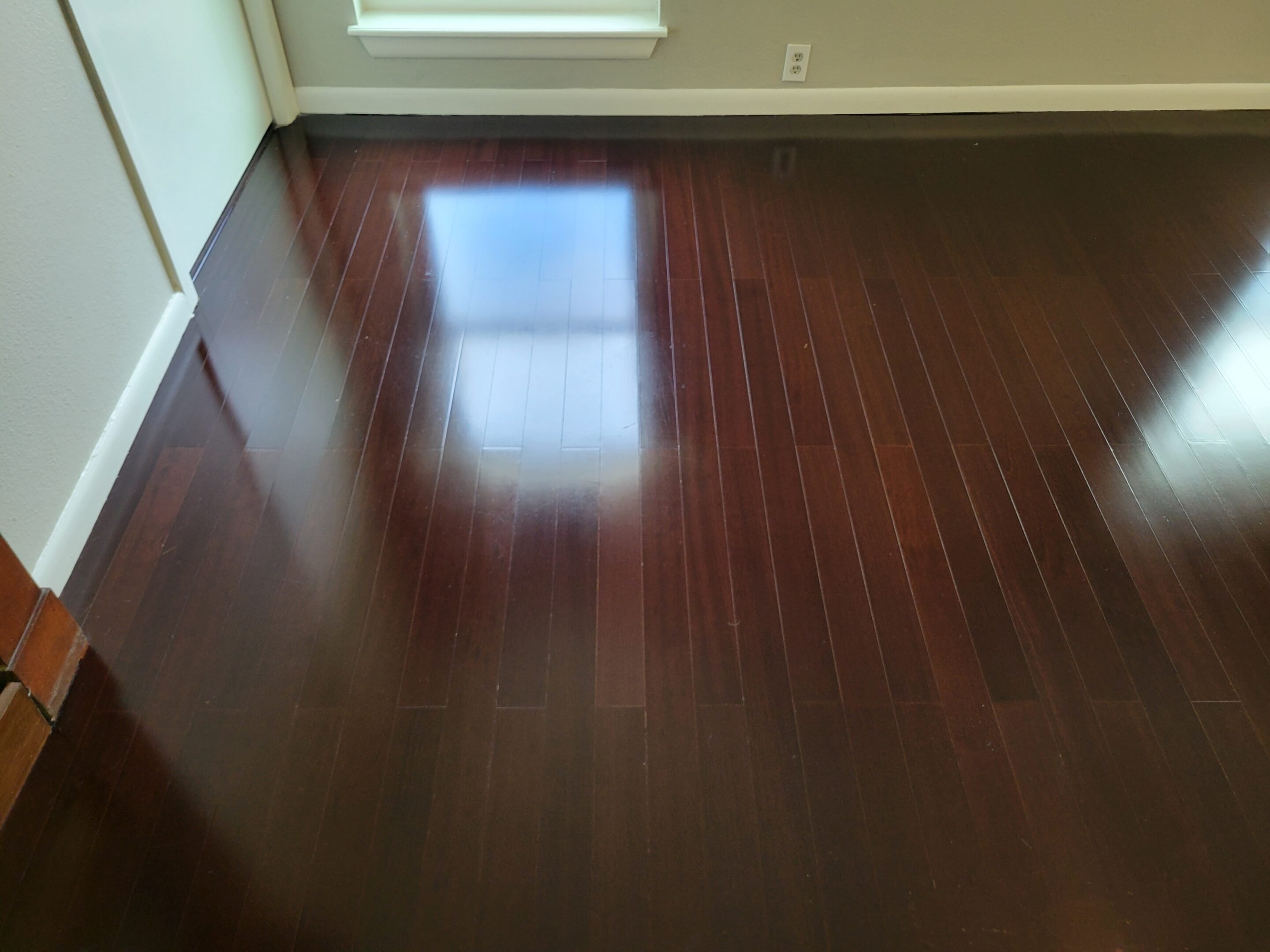
Watch all our floor cleaning videos here.
Laminate flooring is one of the most popular choices for San Antonio homes and businesses. It’s durable, affordable, and, when installed correctly, it looks beautiful. However, despite its toughness, laminate is often the most misunderstood floor type when it comes to cleaning.
At EcoClean, we receive countless calls from homeowners who have accidentally dulled, streaked, or warped their laminate. They usually ask the same thing: “I thought this was supposed to be easy to clean?”
The problem usually isn’t the floor—it’s the method. In this comprehensive guide, Carlos and the EcoClean team are here to answer your top 20 laminate floor cleaning questions from our experience right here in San Antonio. Let’s get that optimum floor shine back.
🛠️ The “Big Picture”: What is the best way to clean laminate flooring?
To answer this, we need to understand what laminate is. It’s essentially a compressed wood composite core with a high-definition photograph of wood or stone printed on top, covered by a clear, tough wear layer.
The best way to clean laminate is to treat it like a delicate photograph, not a stone floor.
Our recommended “Optimum Floor” method:
-
Dry Dusting First: Always use a microfiber dust mop first. This removes the abrasive San Antonio limestone dust that can scratch that clear wear layer over time.
-
Mist, Don’t Soak: Laminate’s kryptonite is water. We recommend a lightly dampened microfiber mop (never a string mop) that has been misted with a specialist laminate cleaner.
-
The “Helping Hand” for Big Jobs: For deep-set soil, hazy film removal, or after a dusty remodel, your best bet is a low-moisture professional truckmount extraction. This removes the grime without soaking the sensitive joints.
🚫 The “Don’t Do It” List: What cleaners should not be used on laminate floors?
We often receive calls for floor restoration because a well-meaning homeowner used the wrong product. Here is what to avoid:
-
Wax and Oil-Based Soaps: Products like Murphy’s Oil Soap or orange oil cleaners are designed to penetrate real, porous wood. Laminate’s wear layer is non-porous. These products sit on top, creating a sticky, hazy film that traps dirt and permanently dulls the finish.
-
Abrasive Cleaners/Brushes: Never use steel wool or harsh scrubbing powders. They will permanently scuff the clear wear layer.
-
Excessive Moisture (The Swiffer Debate): Can I use Swiffer Wet on laminate floors? This is a controversial topic. While occasional use isn’t an instant disaster, many Swiffer products are overly wet. If that solution seeps into the joints where the planks lock, it will cause the core to swell and peak at the seams—a condition we often find in San Antonio homes. We do not recommend Swiffer as a primary maintenance tool for laminate.
🧼 The Chemistry of Cleaning: Is it safe to use specific common house cleaners?
The safest cleaner is a balanced one. Here is the lowdown on some popular household items:
-
Is Dawn dish soap good for cleaning laminate floors? Yes, but with a warning. It is a pH-neutral cleaner, making it gentle on the wear layer. However, use only 1-2 drops per gallon of water. Any more than that will leave a soapy residue that makes your floors look cloudy and streaky.
-
Is vinegar ok for laminate floors? Yes, but use sparingly. Vinegar (acetic acid) is great for cutting through film and haze. However, if used in too high a concentration or too frequently, it can slowly degrade the clear wear layer over several years. We recommend a solution of 1/4 cup of white vinegar per gallon of water, used no more than once a month.
-
Does vinegar disinfect laminate floors? Generally, no. While it has mild antibacterial properties, vinegar is not an EPA-registered disinfectant. If you truly need to disinfect, look for a specialist commercial disinfectant specifically labeled as safe for laminate.
✨ The Pro-Angle: How do professional cleaners mop floors differently?
Standard janitorial crews often use the “mop and bucket” approach, which is the exact opposite of what laminate needs. Here is how EcoClean achieves an optimum floor result:
-
TTI (Testing, Testing, Investigation): We start by identifying if your floor actually is laminate and assess any water damage or film buildup.
-
Low-Moisture/Encapsulation Cleaning: Instead of soaking your floor, we often use low-moisture machines with specialized laminate floor cleaner. This chemistry lifts the dirt and “encapsulates” it into a microscopic crystal that we then extract, leaving no residue behind.
-
Specific Film Removal: If your floors have a cloudy haze from products like Zep or improper Swiffer use, we use specialized counter-rotating brushes to gently strip the film and restore the floor’s original shine.
-
No More Water Damage: Our extraction process ensures that no water is left on the surface, keeping your floor safe and under warranty.
🏛️ Getting the “Helping Hand” Your San Antonio Home Deserves
Maintaining laminate floors shouldn’t be a full-time job or a source of stress. The key is specialized care that prevents moisture from reaching the core and removes the residue that dulls the surface.
If your laminate has lost its “Glow-In-The-Sun” luster, if you are struggling with a persistent hazy film, or if you just want to know that your floors are being professionally sanitized and protected, Carlos and the EcoClean team are here to provide that Helping Hand. We are proud to serve families across San Antonio, from Alamo Heights to Stone Oak.
Stop fighting the streaks and let us restore your optimum floor!
📞 Call for a specialized laminate consultation: (210) 540-2043

